
 Contact us
We help you find the best product and solution
Contact us
Not sure what you need?
Order free product samples and try them before making your decision.
All products
Can’t find what you’re looking for?
We are happy to guide you through our range and offer personalized recommendations for your project
support@tappex.se
News

Erik Forsèn new Technical Sales Representative – welcome!
At Tappex, we are delighted to introduce our newest team member, Erik Forsèn. Erik joins us as a Technical Sales Representative with a focus on Stockholm and Northern Sweden.
The 16-18th of December we take inventory!
On December 16-18 we are closed for deliveries due to inventory.You can reach us as usual by phone and e-mail.
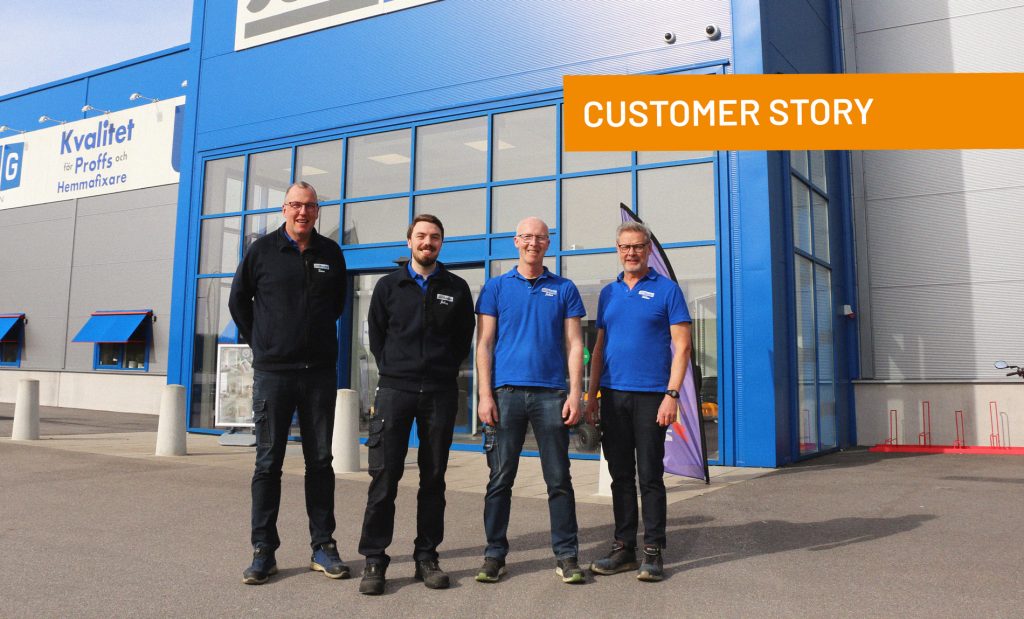
“Tappex’s cutting-edge expertise solves our customers’ challenges”
At Gamla Jernborden in Ronneby, both professionals and do-it-yourselfers can find a large part of Tappex’s product range. Everything from thread inserts and wire thread inserts to blind rivets and self clinch fasteners.
News
Erik Forsèn new Technical Sales Representative – welcome!
At Tappex, we are delighted to introduce our newest team member, Erik Forsèn. Erik joins us as a Technical Sales Representative with a focus on Stockholm and Northern Sweden.
The 16-18th of December we take inventory!
On December 16-18 we are closed for deliveries due to inventory.You can reach us as usual by phone and e-mail.
“Tappex’s cutting-edge expertise solves our customers’ challenges”
At Gamla Jernborden in Ronneby, both professionals and do-it-yourselfers can find a large part of Tappex’s product range. Everything from thread inserts and wire thread inserts to blind rivets and self clinch fasteners.
Suppliers








Our products
are used everywhere.
Frequently asked questions
What kind of blind rivet should I use?

There are many variants of blind rivets, made of different materials and with different functions. The rivet that suits best depends on several things, such as what it is being riveted together, whether the material is hard or soft, whether it is steel, stainless steel, aluminium or another material. Are there requirements regarding strength and, if so, what forces, tension or shear forces? What environment will the blind rivet be exposed to, does it come into contact with chemicals? Will the finished application be used indoors or outdoors? So, there are several things to consider when choosing blind rivets, but we have extensive experience of rivet joints so together with you, we’ll surely find a good solution.
The blind rivet nut is not attached; it rotates. Why?
Either the nut is incorrectly tightened, or the holes are wrong. Normally, the nut should not rotate if the part to be mounted has more than one attachment point. It’s important to choose the right material for the screw and blind rivet nut. In order to prevent rotation, it’s also important that what is screwed into place is flush with the top of the nut. To be absolutely sure – use a hexagonal nut.
It’s cramped on the back and the blind rivet nut gets too long. Is there a shorter one?
Yes. We have a blind rivet nut that we call CD Micro. It’s available in different variants that are shorter and are used where the space on the back side is limited, as in, for example, pipes.
What kind of thread insert is suitable for plastic?
It depends on what the plastic and the application look like. Will the thread insert be cast in or retrofitted? There are several things that determine what’s suitable. We have worked a lot with this type of thread insert and usually find a good solution that provides the joint the right performance and a viable assembly method. Contact us and we’ll find what suits you best.
The wire thread insert has been installed too deep. How do I get it out?
Here, it’s important not to destroy the surface or the entrance of the thread. This happens easily, especially on insert with a break tang. We often see cases where pliers were used to try to pull it out. With Tangless inserts, there is no tang to break, instead there is a track at both ends where a hook in the mounting tools should grip in and then drive the insert into the threaded hole. For disassembly, there is a similar tool where the hooh grips is in the other direction. The tool is turned counter-clockwise so that the insert is unscrewed, without damaging either the thread or the part.
The Self clinch nut isn’t fastened in the sheet metal, why?
The most common reason that the clinch nut does not fasten in the sheet metal is that the sheet is too hard. When a clinch nut is to be installed in sheet metal, it is therefore important that the nut is harder than the sheet metal in which it is to sit. If the sheet is softer than the nut, the material is pushed into all of the nut’s tracks and grooves and thereby keep it in place. Self clinch fasteners are available in several different materials, such as steel, stainless steel and aluminium. If nothing works and they still tend to detach from the sheet, a riveted fastener is an alternative. It has a spigot that goes through the sheet and is compressed down on the back so that you basically get a completely flush rivet joint.
Why choose wire thread inserts?
Wire threads are found in everything from delicate electronics to cars, ships and airplanes. The biggest advantages are:
• Strength: Distributes forces more evenly in the material
• Lifetime: Loosen and tighten screws without affecting the material
• Vibration-proof: Holds the screw in place in environments where there is a risk of screws loosening
• Repair: Perfect for use when an existing thread has been damaged
What is a tangleless wire thread?
Wire threads from Tappex are available as standard and tangleless. Tangless wire threads lack the “pin” (found at the bottom of traditional threads) that otherwise must be broken off after assembly. You avoid the risk of a broken pin remaining in sensitive equipment, it saves time in production and because the thread looks the same at both ends, you can easily adjust the thread with special tools if it, for example, ends up too deep.
When should I choose Self Clinch Fasteners?
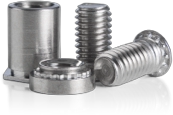
Self Clinch Fasteners are the right choice when you are working with thin materials such as aluminum, steel or stainless steel and need to create strong, vibration-proof threads or spacers. They are pressed in mechanically and become permanent when the sheet metal flows in and locks the element. This eliminates the need for welding and heavy-duty solutions such as loose nuts and bolts.
Why choose Tappex blind rivet nuts?
• Easy installation: Installs quickly from one side (blind installation).
• High strength: Creates load-bearing threads in materials that are too thin to be threaded.
• Versatility: Available in several materials and designs for all types of environments.
Why use thread inserts?
When screwing directly into soft materials like thermoplastics or aluminium, the threads wear out quickly. A thread insert acts as a reinforcement that distributes the force over a larger surface area. This allows you to use smaller screws while maintaining (or increasing) strength, while ensuring the end user can insert and remove the screw repeatedly without damaging the thread.
What types of thread inserts does Tappex offer?
• Trisert and Trisert-3: Installed by self-tapping. Available in several variants, with or without heads, in various lengths and materials.
• Foamsert: Installed by self-tapping. Suitable for lower-density materials such as wood and foamed plastics.
• Multisert: Installed by pressing, usually in combination with heat (thermal) or ultrasonic equipment.
• Microbarb: Designed for thin-walled materials; installed by pressing, typically combined with heat.
• Hi-mould: Designed for "moulding-in" during the plastic injection process; available with both blind and through-hole designs.
Why choose Tappex KD-nuts?
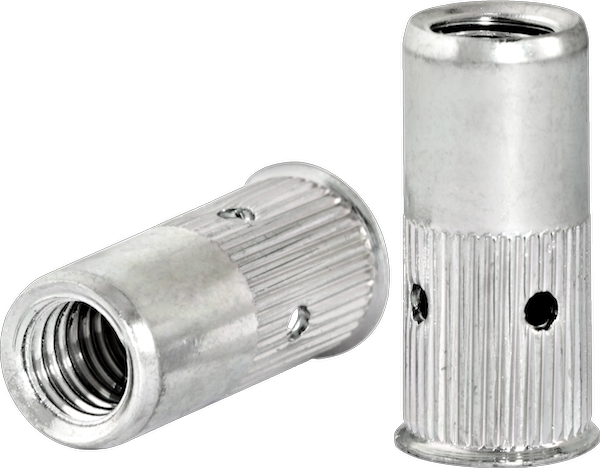
Tappex KD-nuts provide maximum pull-out resistance and torque strength. Thanks to their clever design with external barbs, the nut "bites" into the material during installation; as the screw is tightened, the sleeve expands for further stability. They are excellent for use in furniture production or technical plastic components where repetitive assembly is required.
• Fast installation: Easily installed by pressing – no tapping required.
• High strength: The expansion function ensures the nut stays secure even under load.
• Non-destructive: Provides a strong thread without splitting brittle materials.
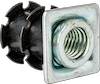
Why use tube inserts from Tappex?
Creating threads directly into a tube wall is often difficult. Tappex tube inserts are specifically designed to be pressed into the tube end, where they "bite" into the material thanks to their knurled or finned exterior. They are ideal for everything from office furniture and exercise equipment to industrial tubular structures.
• Fast installation: Easily installed by pressing – no welding or tapping required.
• High load capacity: Designed to handle both compression and tensile loads in tubular constructions.
• Aesthetics: Provides a clean finish to the tube without visible weld seams.
How does a Tappex expansion plug work?
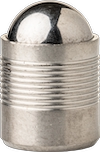
The expansion plug is installed by being pressed into a pre-drilled hole. An integrated ball or expander forces the plug’s sleeve outwards, creating a seal through metallic contact. The result is a permanent barrier that withstands high working pressures and prevents the leakage of liquids and gases.
Vacancies
There are no vacancies at the moment.
Sustainability

Traceability and quality
Reliable deliveries